

Pelvic Health After Pregnancy
Your Postpartum Body Deserves Care Too
If pregnancy and birth changed how your body feels, you are not alone. Maybe you leak a little when you laugh or sneeze. Maybe things feel heavier down there. Maybe your core feels unfamiliar, sex feels different, or you just know your body does not quite feel like it used to. First, please hear this: you are not broken. So many moms experience changes like these after having a baby, and too often, no one talks about it clearly enough.
What Is Postpartum Pelvic Health?
Postpartum pelvic health is about how well the muscles and tissues at the bottom of your pelvis are supporting your body. These muscles help control your bladder and bowels, support your uterus and vagina, and play a role in movement and sexual comfort.
After pregnancy and birth, these muscles can be stretched, weakened, or even too tight. Healing is not just about getting stronger. It is about restoring balance, coordination, and comfort.
Simple Things You Can Start Doing Today
Healing does not have to be complicated. Small, consistent steps can make a big difference.
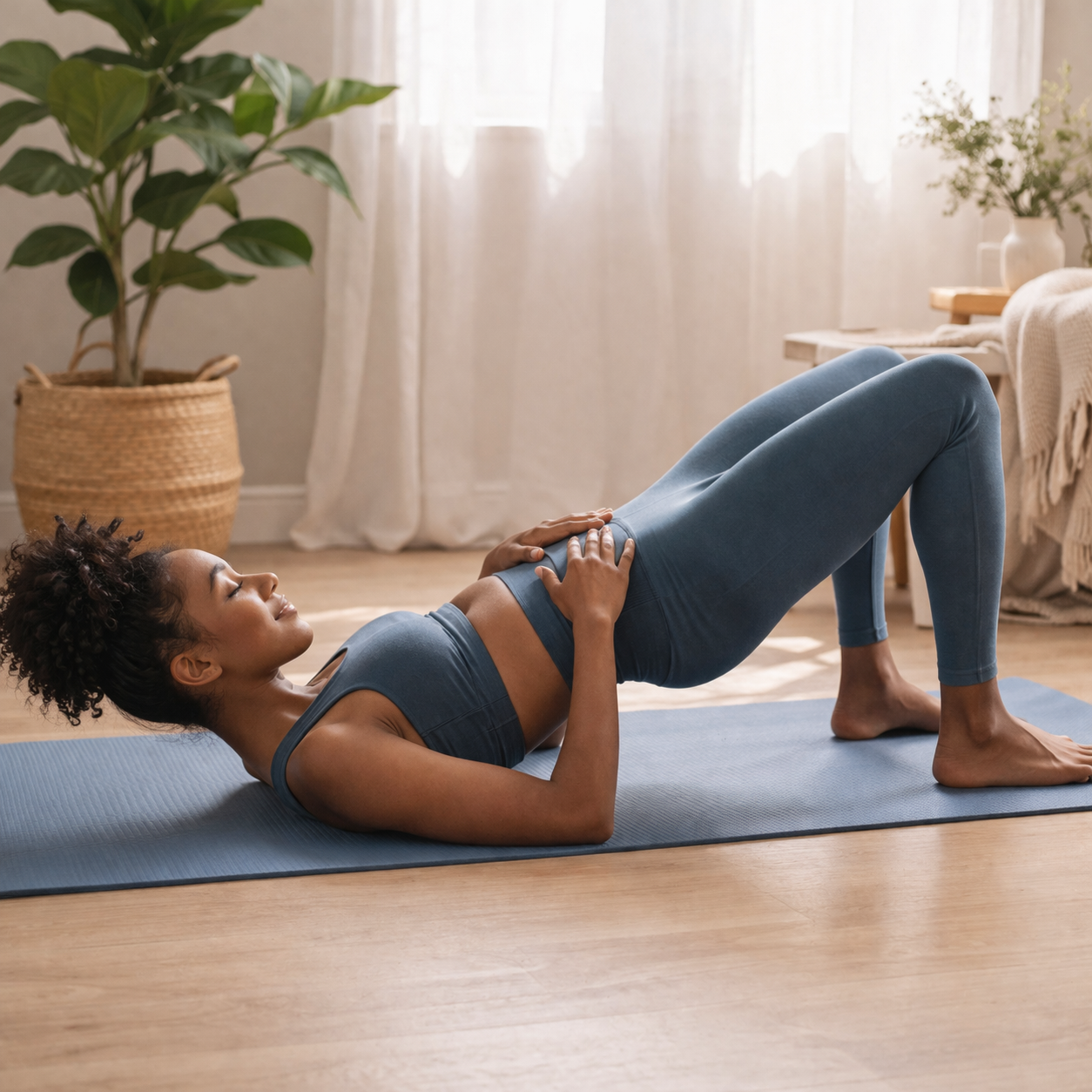
Start with your breath. Deep breathing helps reconnect your core and pelvic floor. Try slow inhales through your nose and gentle exhales through your mouth, allowing your body to relax.
Practice gentle pelvic floor engagement. Think about lifting and releasing the muscles you would use to stop passing gas or urine. Focus on both the squeeze and the full relaxation.
Move with care. When lifting your baby, car seat, or anything heavy, bend your knees and avoid holding your breath.
Support your bathroom habits. Stay hydrated, eat fiber-rich foods, and avoid straining. Using a small stool under your feet when using the bathroom can help your body relax.
Use “the knack.” Gently engage your pelvic floor just before coughing, sneezing, or laughing to help reduce leaking.
These small habits support healing throughout your day.
When to Get Extra Support
You do not have to figure this out alone. A pelvic health physical therapist can help you understand what your body needs and guide your recovery.
Consider seeking support if you have:
🔹→Ongoing leaking or bowel control issues
🔹→A feeling of heaviness or bulging
🔹→Pain in your pelvis or during sex
🔹→Core weakness that is not improving
🔹→Symptoms that are limiting your daily life
Getting help is not a last resort. It is a powerful step toward healing.
Your Healing Does Not End at Six Weeks
Many women are told they are “cleared” at six weeks, but real recovery continues well beyond that point. Your body has gone through a major transformation, and it deserves time and care.
You deserve support that looks at your full recovery, not just a single moment in time.
What You Might Be Feeling
Every woman’s experience is different, but some common postpartum symptoms include:
🔹→Leaking urine when you cough, sneeze, or exercise
🔹→A feeling of heaviness or pressure in the pelvis
🔹→Pain in the pelvic area or during sex
🔹→Core weakness or abdominal separation
🔹→Changes in bowel control
These symptoms are common, but they are not something you have to just live with.
Give Yourself Time to Rebuild Strength
Walking is a great place to begin if it feels good for your body. You do not need to rush back into intense workouts. Healing is gradual.
As you return to movement, pay attention to your body. If you notice leaking, pressure, bulging, pain, or abdominal doming, that is your body asking for more support.
Progress happens step by step, not all at once.

A Gentle Reminder
Be patient with yourself. Rest when you can. Move with intention. Pay attention to what your body is telling you.
Postpartum recovery is not about snapping back. It is about healing well, feeling stronger, and moving through motherhood with more comfort and confidence.
If something does not feel right, trust yourself. You deserve care, answers, and support.